
Amalfi, Differently.
A more personal way to understand the coast
There is a version of the Amalfi Coast almost everyone knows before they arrive.
The cliffs, the road, the famous towns, the terraces above the sea. Positano theatrically hugging the rock in colour and drama. Amalfi with its ancient cathedral and captivating seafront. Ravello suspended above it all, impossibly beautiful in the high air. It is the coast of photographs, of views, of places people feel they must see at least once.
There are moments here when the beauty almost stops you speaking. The land rises straight from the water. Villages seem to hold onto the stone. The sea changes by the hour. A bend in the road can suddenly open the whole coastline in front of you.
But for me, the view has never been the whole story.
I was born in England to Italian parents, both from Minori on the Amalfi Coast. Throughout my childhood, I returned there to grandparents, aunts, uncles and cousins. I did not know this place first through travel, or through an itinerary, or through the polished language of a destination. I knew it through family: through love, language, food, summer heat, familiar voices, and the feeling of arriving somewhere people knew my name and where I felt I belonged.
Before I understood the Amalfi Coast as a place people travelled to, I understood it as homecoming.
That is where La Vita Vera comes from. It is not from a list of sights, or from a desire to compress the coast into as many days as possible, but from a relationship with it.
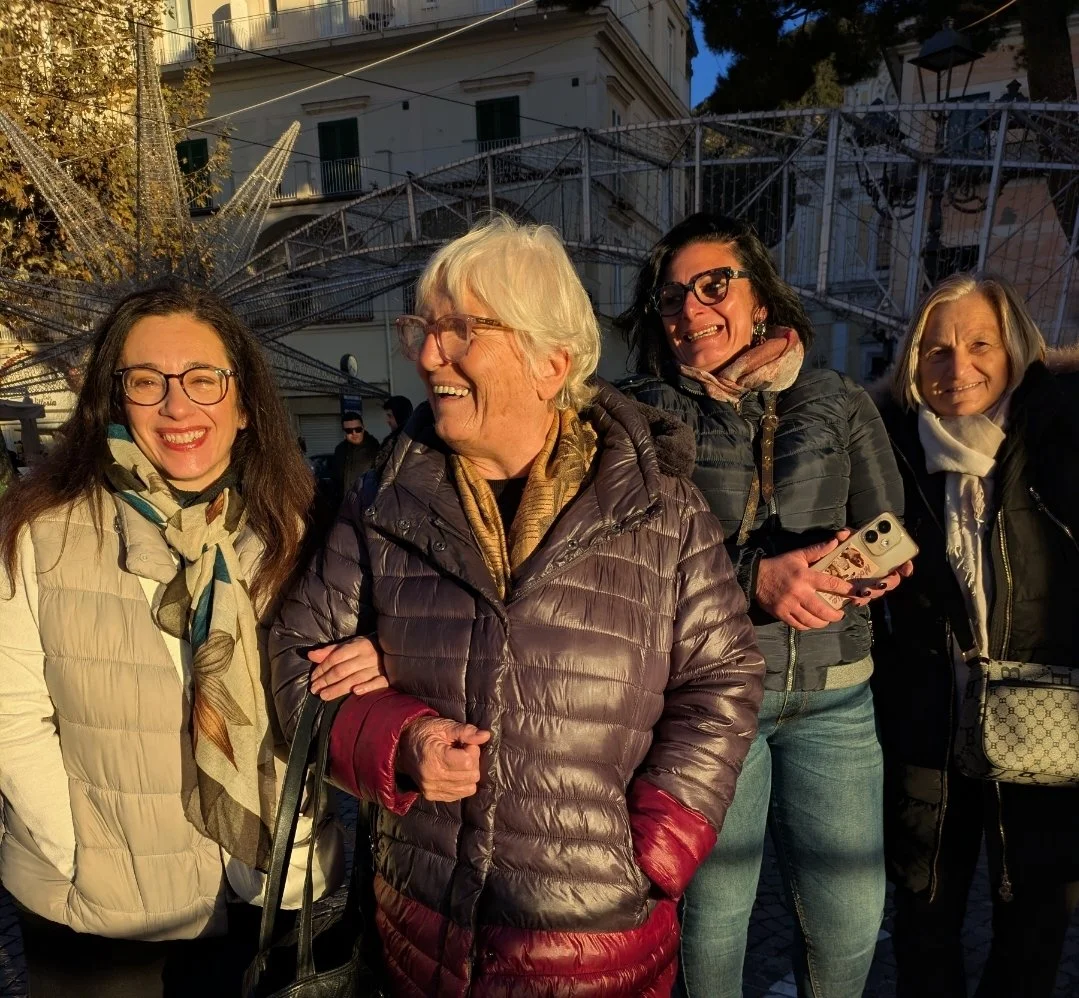
The Amalfi Coast is often sold through its most dramatic face, and understandably so. The famous towns have history, scale, theatre and beauty. But the coast I love most still feels inhabited.
It is Minori, where my family story begins and daily life still comes through as you look around the small town. It is the lemon terraces above the town, where the landscape is not simply admired but worked. It is Ravello, where height and air give the week space to breathe. It is Tramonti, away from the edge of the sea, where old vines and family-run production reveal another kind of richness. It is the coastline seen from the water, where the famous places soften and where you gain a new perspective of the enormous scale of the mountains. It all begins to make sense.
These are the places I chose for La Vita Vera. They are not random, or because they make a neat checklist, but because together they create the feeling I wanted women to have: beauty, yes, but also warmth, depth, ease and welcome.
A villa above the movement
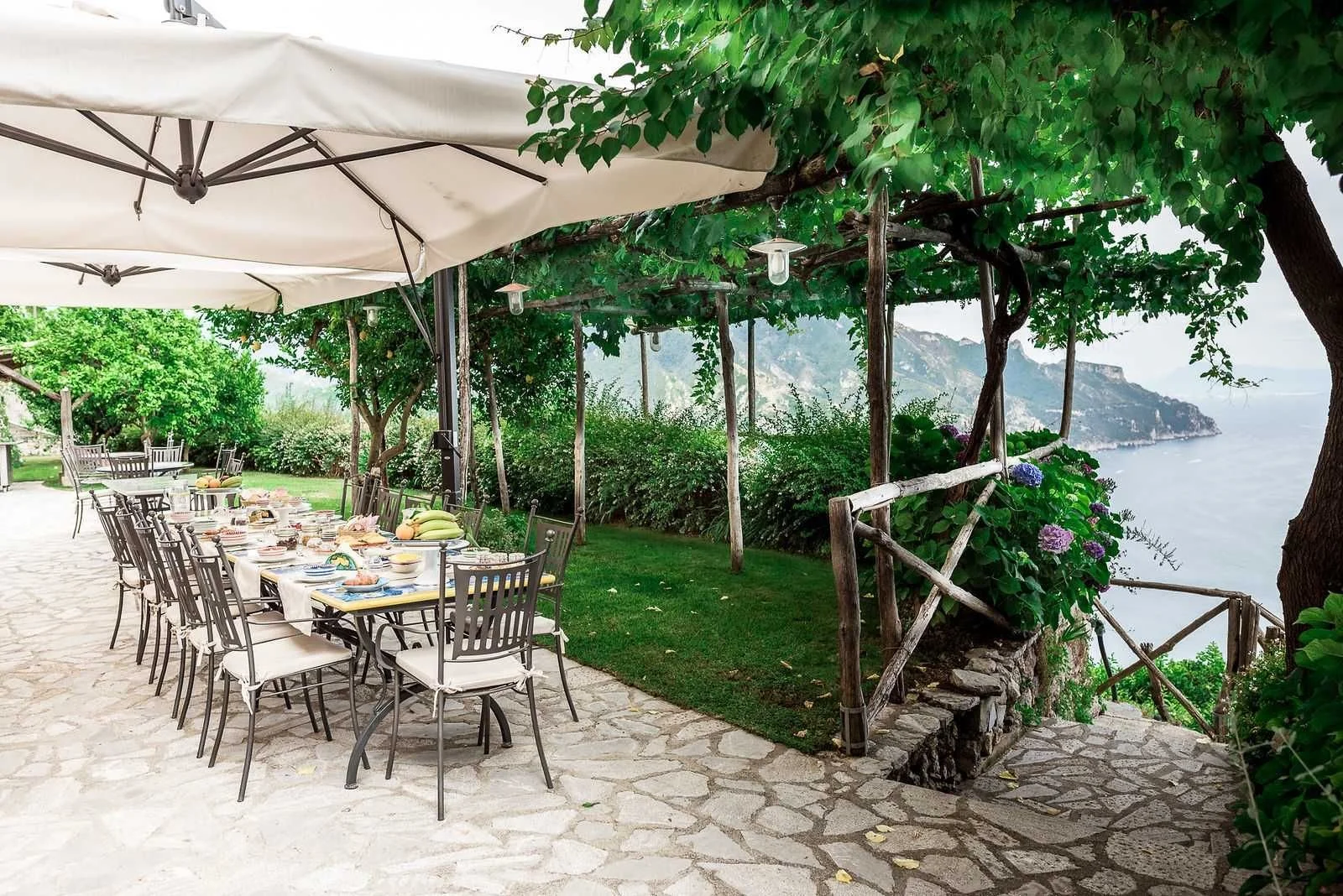
La Vita Vera is based in a private villa in Ravello, above the movement of the coastal road. That choice matters.
Ravello gives the week stillness. You unpack once. The villa becomes home. Each day has somewhere to begin and somewhere to return to. There is a table, a view, a rhythm, a sense of landing. Instead of moving constantly from hotel to hotel or town to town, the week has a centre.
That centre gives everything else more meaning. There is time to wake slowly, to have breakfast without rushing, to leave for one clear experience and return without feeling scattered. There is time to swim, rest, talk, read, dress for dinner, or simply sit in the light. The structure is intentional, but it is not over-filled. La Vita Vera is not built around the pressure to see everything. It is built around the possibility of receiving more from fewer, better-chosen moments.
Minori, where the story begins
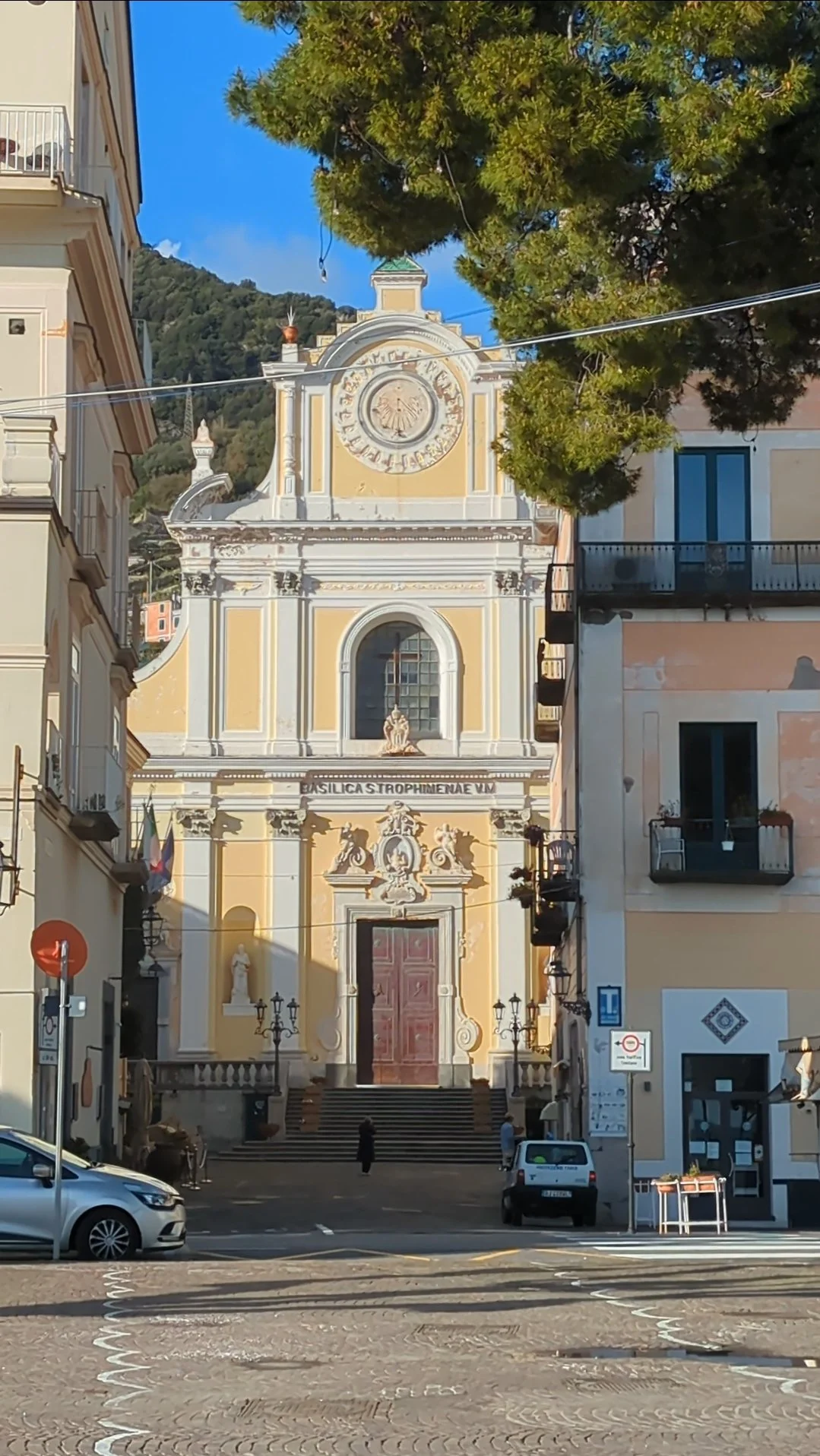
Minori is where my parents grew up, and it is where my own understanding of the coast begins. It is smaller and warmer, with town life visible around you: shopkeepers, artisans, church bells, pastry, sea air, voices, greetings, and the small recognitions that make a place feel lived in rather than arranged. Minori does not need to perform itself. It simply is.
Above the town, the lemon terraces tell another part of the story. Here, the fruit is not decoration. It is livelihood, landscape, work and inheritance. The terraces are beautiful, but they are also practical, demanding, tended. They remind you that the Amalfi Coast is not only a place to look at. It is a place people have shaped, carried and worked for generations.
To spend time there is to feel the coast differently. Less as a spectacle. More as a place with warmth, texture and life moving through it.
The coast from the water
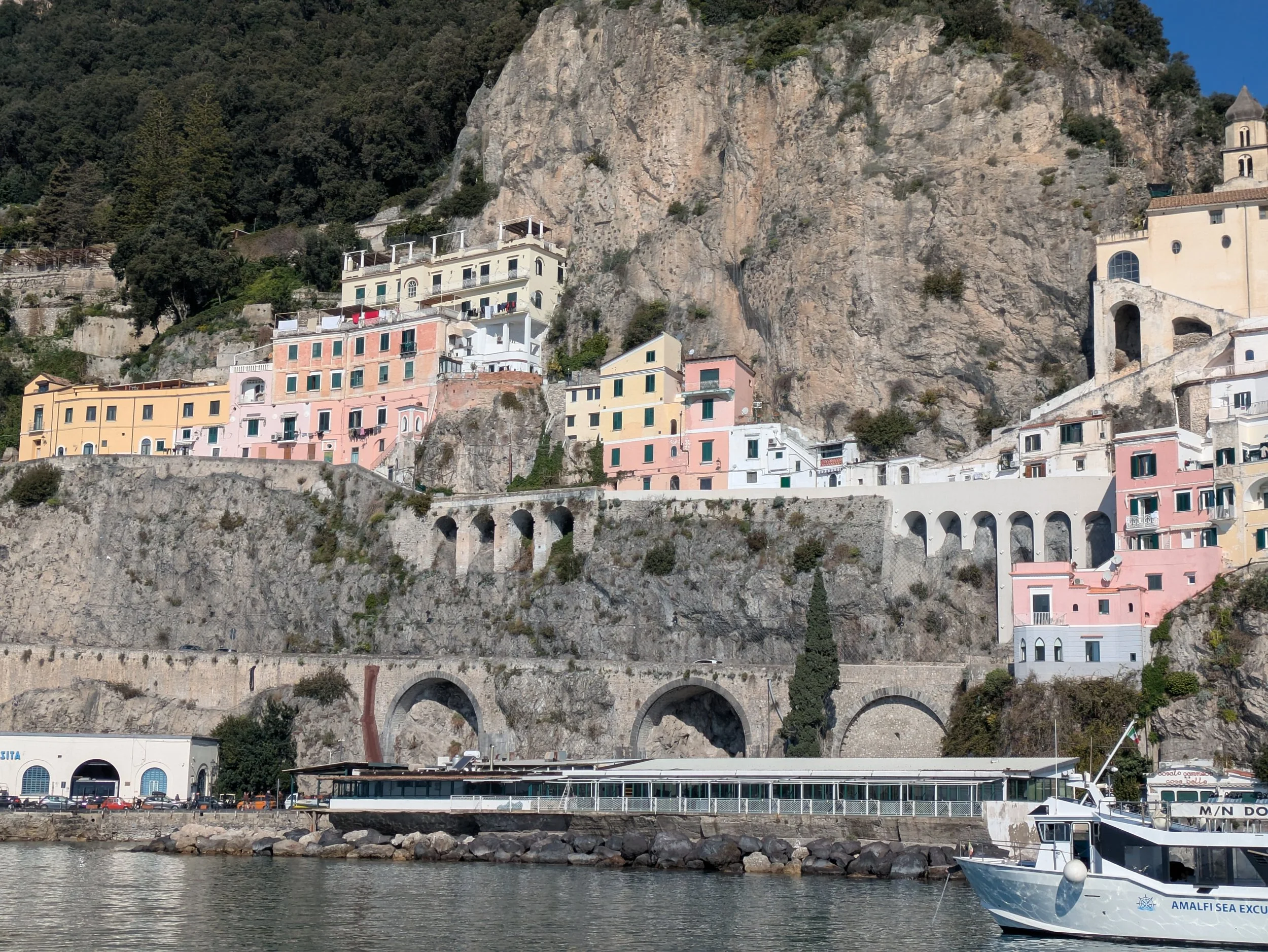
The sea changes the way you see everything.
On our private yacht day, we see Amalfi and Positano from the water, along with the coves, cliffs, villages and smaller places held into the rock. From the sea, the coast feels expansive. You can take in its drama without being swallowed by the crowds.
That distinction is important to me. The famous names are part of the story, and I would never pretend otherwise. I do not want women to come all this way and feel they have somehow missed the coast they came imagining. But I also do not want the week to be consumed by the most crowded parts of it.
So the day is not built around rushing ashore or ticking off towns. It is built around the sea itself: beautiful swimming stops, time on the water, the coastline opening slowly from the boat, and a pause for lunch along the coast, guided lightly around weather, sea conditions and the rhythm of the day.
The sea gives the coast back its space.
Tramonti and the life underneath the view
In the hills above the coast, Tramonti offers another kind of richness.
The noise drops away. The air changes. There are old vines, small producers, mountain weather and land still cared for through knowledge passed down over time.
It is not the Amalfi Coast of the postcard, but it belongs absolutely to the coast’s deeper story.
Tramonti reminds you that this place is not made only of sea views, hotels and famous names. It is also soil, wine, food, work, weather and generations. This is the life beneath the view, and it is very easy to miss, not because it is hidden, but because most people are moving too quickly.
Space for the week to become yours
When a place is famous, there can be pressure to do it all: to see enough, photograph enough, reserve enough, and fit enough into the week so that it feels worthwhile. I understand that impulse. The Amalfi Coast can make people feel they must keep reaching for the next place.
But sometimes what makes a place stay with you is not another stop. It is the space around it.
A long lunch that changes the pace of the day. A table where conversation can unfold. A greeting in the street. A lemon terrace where the fruit is part of daily life. A room with a view that is not only looked at, but lived in.
That is what I wanted to build into La Vita Vera: a week where women do not have to hold the whole thing together themselves. There are no constant decisions about where to go next, or piecing together transfers, reservations, routes and timings.
The week is hosted with one clear anchor each day and space around it. Meals, movement, transport, translation, timings and the details are considered in advance, so that guests can arrive into the experience rather than manage it.
There is also room for your own wishes. If you would like to visit another town, spend time in Amalfi, return to a place that caught your eye, shop, rest, swim, write, or simply have a quiet day at the villa, there is space for that too. La Vita Vera is thoughtfully hosted, but it is not over-controlled. The structure is there to give ease, not to fill every hour.
The meaning of welcome
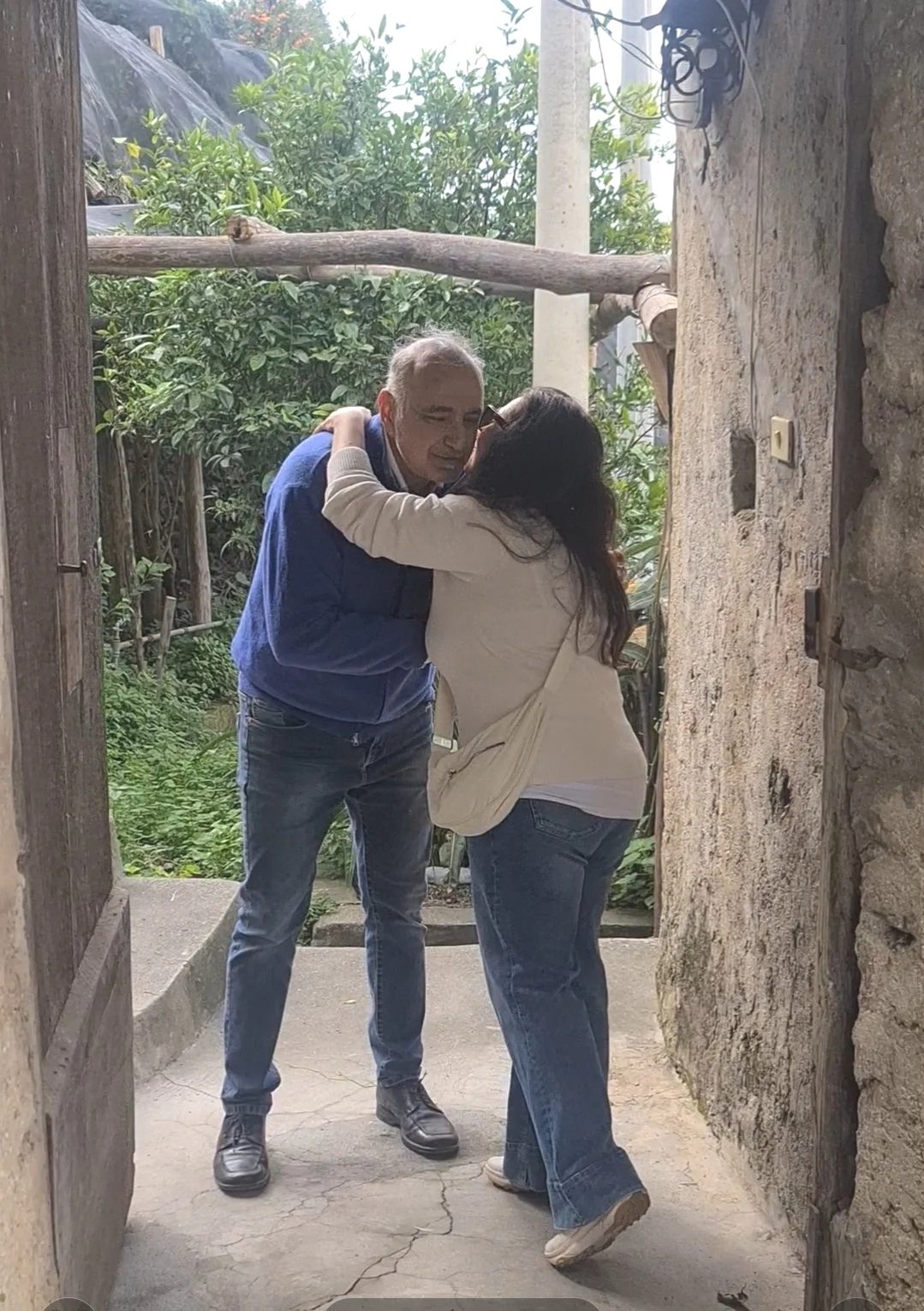
The deeper intention behind La Vita Vera is welcome.
I know what it feels like to be expected somewhere in Italy. To have someone open the door, set the table, insist you eat, tell you to sit down, and make you feel that you are not passing through. That feeling has shaped me.
The people we meet through La Vita Vera are not names gathered at random from a supplier list. They are family connections, friends and trusted local relationships; people who give the coast its feeling because they are part of it. That changes the atmosphere of the week. It makes the experience warmer, more personal and less like being processed through beautiful places.
For me, Italy has always been understood through the table. Not formally, or perfectly, or as performance, but through the instinct to feed, welcome, include, linger, talk, laugh and stay a little longer than planned.
That is why the table sits at the centre of La Vita Vera.
A table gives the day somewhere to land. It turns food into memory. It makes beauty felt.
The Amalfi Coast, brought closer
La Vita Vera is for women who still delight in beauty, good food, conversation and discovering places properly.
It is not about doing more of the Amalfi Coast. It is about coming closer.
Closer to Minori. Closer to the lemon terraces. Closer to old vines in Tramonti. Closer to the sea. Closer to the table. Closer to the life within the view.
Seen through my eyes. Shaped through my roots. Shared at one table.
Seven women. One table.
The Amalfi Coast, brought closer.
If this way of experiencing the coast speaks to you, you are invited to request the full details.
Warmly,
Mariangela